The Writing Process Blog Hop

Yes, it’s actually happening!

I had a bit of a false start back in April when Gemma Hawdon originally tagged me, and now that Claudette Young, A.K.A. Claudsy has tagged me for a second time, I actually found a couple of fellow bloggers who hadn’t already done it 🙂

First, I must thank my nominators:

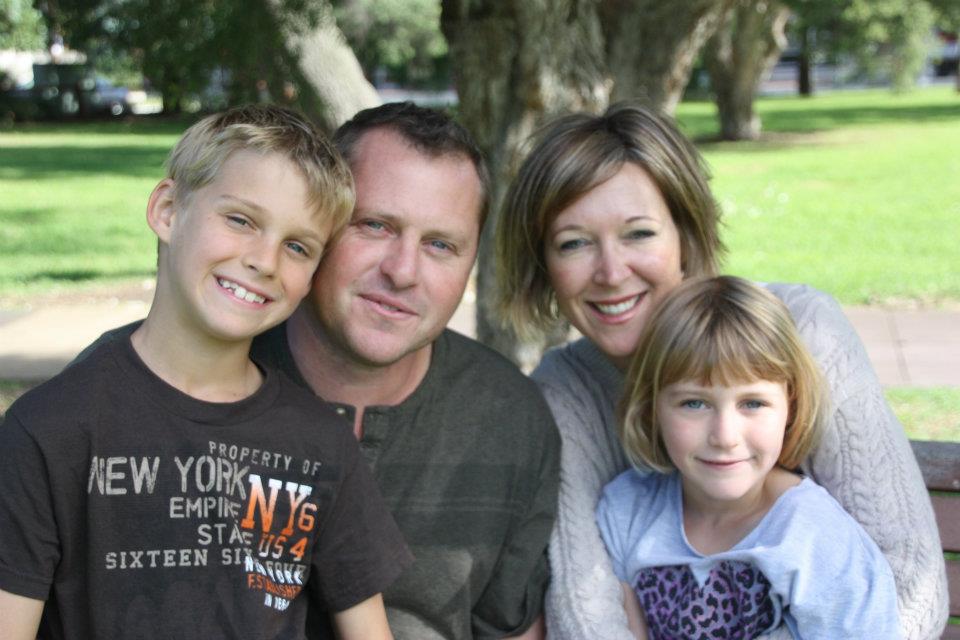
Gemma Hawdon and familyGemma Hawdon lives in Melbourne, Australia with her husband and two children. She writes articles, short stories and web content for clients. She’s just completed the first book in a two-part children’s fantasy series and writes a blog http://topoftheslushpile.com/ about – funnily enough – trying to get to the top of the slush pile. She loves hot coffee, long walks and sneaking off to the movies when everyone else is at work.

Public Contact Details:
Twitter: @gemmaleehawdon
Facebook: facebook.com/topoftheslushpile
Email: gemmaleehawdon@gmail.com


Claudette J. Young began writing seriously in 2008 and continues to write in multiple Claudette J. Younggenres. She strives to learn something new each day—a new poetry form, new writing technique, new foreign word, or whatever strikes her fancy. Her primary genres are poetry, science fiction/fantasy, flash fiction, children’s literature, women’s fiction, along with creative non-fiction, essay, and memoir. She tries to cover all of her bases by writing for audiences that range from young children to senior citizens.

Claudette has been published in numerous online publications for poetry, fiction, and non-fiction, as well as print magazines and two international poetry anthologies. She continues to hone her craft by working on multiple projects, including book-length ones. Her regular work can be viewed on her collaborative website and blogs at: http://2voices1song.com/ as well as www.claudettejyoung.com/


Now for the hard part

I have to answer four questions all about—you guessed it—my WIPs and process. I’ll apologize to my followers, for whom some of this will be a repeat of my Next Chapter posts, but I hope there will be some new, tasty stuff in the mix for you too.

What am I working on?

Several projects. This year, I decided, inspired in part by Rochelle (one of my nominees – see below) to attempt working on multiple projects at once.

First is my epic fantasy, Initiate of Stone.

An aspirant mage is betrayed by those she trusts most, but when war razes her village, she loses family, friends, and the possibility of initiation. The secrets kept from her may be the keys to stopping the mad god intent on enslaving her world and her quest for power leads to a confrontation with the man who tore her life apart.

Yeah, still needs work.

It’s currently out with betas. I have a couple who are very thorough/detail oriented, and that’s just fine with me, because I’ve been able to use the time to make some major decisions about the novel, remap it, make editing notes, a beat sheet, and reverse engineer the plot. When I hear back from my peeps, I’ll be ready for one more massive rewrite, and then it’s onto querying.

Second is a young adult urban fantasy titled, Figments.

Her father’s murder sends a girl spiralling into depression, and, she fears, delusion. As her figments turn out to be real, she learns that everything else she thought she knew is a lie, opening the door to the terrifying possibility that her father was a modern-day Frankenstein, and she is his apocalyptic monster.

Figments was last year’s NaNoWriMo project and I am currently mapping it out, then I’ll get to the beat sheet, edit notes, and reverse engineering. This one has a few revisions ahead.

My third project is Gerod and the Lions, a middle grade, traditional fantasy.

A boy’s father sells his little sister to the Child Merchants and he sets off, alone, to rescue her. Clever, but small, he fails his first attempt and finds shelter in a circus where he discovers a talent for talking to lions and allies who help him track the Child Merchants to the capital, where a royal encounter and a daring rescue bring the boy face to face with his sister and her new owners.

I’m still drafting this one, but I expect to be finished by the end of this year.

Finally, there’s Apprentice of Wind, the second book in my epic fantasy series.

She’s come into her power through an act of murder and now a rogue sourceress (it’s not a typo), in the company of the half-brother she never knew and the avatar of the goddess, must defend the king’s city and then race to battle the mad god. If she can’t become powerful enough to defeat him, her life and her world will be destroyed.

The draft has been assembled and mapped, but will require substantial rewriting because of the revisions to IoS.

How does my work differ from others in its genre?

What’s that saying? There’s nothing new under the sun.

The only thing that distinguishes my work from other fantasy novels being written and published is me. It’s my writing and my voice that will set them apart.

The epic series is pretty standard fare, but I have what I hope is a truly strong heroine who drives the plot and some compelling secondary characters all of whom I torture mercilessly. None of the characters is purely good or evil—except the mad god, he’s just psychotic—so it’s complex and dark and unrelenting. And there’s a lot of vomiting, or so I’ve been told by at least one reader 😉

The YA novel features a gargoyle, but I think in the search for “original” beasties, this ground has already been trod, as has the Frankenstein angle, but not, perhaps, in the way I have approached it.

The MG might be fairly original, a young lion tamer who takes down a child slavery ring? I might have something there.

Why do I write what I do?

The main reason is that fantasy and science fiction were what I started reading: C.S. Lewis, Lloyd Alexander, Susan Cooper, Madeline L’engle, Ursula K. Le Guin. It was also what I started watching: Doctor Who, Star Wars, Star Trek, etc.

As I read or watched, I imagined myself as a character in the story. Sometimes I’d even dream about it. These derivative, or fan-based, works were some of my earlier stories. When I grew older, I understood that I wanted to help other people feel what I felt as the consumer of these creative works.

How does my writing process work?

Sweet Jebus.

The thing about my process is that it is . . . a process. It’s what happens between my head and the page. The two words I might choose to characterize my writing process are organic and evolving.

I generally shoot from the hip. I write first and ask questions later, but I’m also addicted to learning. With every writing craft book or blog post I read, or workshop I take, I learn something, and I incorporate bits and pieces of everything into my process. How do I choose which bits and pieces? It feels good or right. It fits.

I’m an unapologetic pantser, but I generally outline after the first draft, and even though I may not have a formal outline to write by, I always know where my story is going. I know the end and major events before I begin. I may even have sketched out scenes and characters before I get to the actual drafting. I do a lot of preliminary work in my head (read, incubating).

According to some coaches, that’s a form of outlining. *bats eyelashes endearingly*

I’ve tried alpha readers (who read an early draft), beta readers (who read later drafts), professional editors, reviews of the first X pages, first act (some of this done with Jenny – see nominees, below) . . . I generally give everything a try once and decide by the results I get whether I’ll do it the same way next time or not.

In this moment, here’s how my process works:

Ideas:

Ideas emerge from dreams. I, like many writers, dream in story. It may be a bit surreal, but they’re full-colour movies, sometimes even in three acts. This used to happen a lot when I was a kid, but now, I might get one or two story dreams a year. Still, that’s a fair backlog of ideas.

Ideas emerge from journaling. I started keeping a journal in university when knowledge from different disciplines kept colliding in my skull. Now, I find that my curation is taking the place of journaling. I share the articles and posts that make me think or feel and that becomes a kind of record. I also use Evernote.

Ideas emerge from reading. I’m a “clip-rat.” If I read something physical that makes me think, I clip it, or make a copy and save it in my idea file.

Ideas emerge from exercises or prompts. This is not as frequent as I’m not keen on exercises and prompts, but on a few occasions, it’s worked. Gerod and the Lions resulted from a Natalie Goldberg prompt.

Drafting:

I used to draft long hand because that was the tool I had most easily available to me. The idea that became Initiate of Stone filled two large spiral-bound notebooks.

Then, I started to type.

That gave way to word processing when I got my first computer. Those were the DOS days of black screens and orange text.

Now, I rely mostly on Word, and though I have purchased Scrivener, I’ve found that the process of importing and formatting is a bit cumbersome. I’d rather be writing. But I have enrolled in a course, so that may change.

Revisions:

After drafting, I let things sit for a while and move onto other projects, or work on short stories, or do something completely unrelated like home renovation or gardening.

I print out my draft as economically as possible and read it through.

I “map” my novels out. It’s an outline of sorts and I can easily rearrange, cut, and rewrite based on my map. Mapping is done long hand and then transcribed into a computer document.

Beat sheets and edit notes are generally long hand as well. I usually relocate to the living room or some other place than my office to make these notes.

Once I have all my structural work and edit notes completed, I’ll launch into editing the draft, copying each chapter into a new document and rewriting/editing it fully before moving on to the next.

This process repeats until I’m satisfied.

Alpha or beta readers, or editors might come in around the third or fourth version.

And that’s pretty much how it’s gone to this point.

My process is continually subject to change.

And finally, my nominoms (da-doo-da-do-doo – yes, I’m a Muppet at heart).

Jenny Madore (writing as JL Madore)

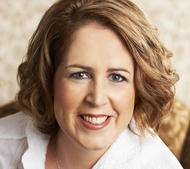
JL MadoreJL Madore didn’t find writing so much as it found her. Waking each morning with a vivid cast of characters tangled in chaos in her head, it seemed essential to capture them on the page. With Blaze Ignites and Ursa Unearthed published and receiving rave reviews, she’s turning her attention to Watcher Untethered, an unpublished paranormal/erotic romance manuscript which just won 4th place in the Toronto Romance Writers – The Catherine. Aside from spinning tales of elves, weres, demons and fallen angels, she’s also Vice President of the Writers’ Community of Durham Region, a 300 member writing organization just outside of Toronto. www.jlmadore.ca


Rochelle Sharpe (writing as R.L. Sharpe)

I’m many things: A reader; a writer; a mother of 2; a wife of 1; Christian; Australian.Rochelle Sharpe

I’ve been telling stories since I could talk and started writing them down when I was 8. It will take an awful lot to stop me – like death. Some say I’m a dreamer, and I have my head in the clouds, but I say that’s better than having two feet planted firmly on the ground.

I define myself as a storyteller. Writing is my life. Through writing I get to record all the worlds I have been blessed with discovering, worlds I would love to share with you fully one day, as soon as I can convince a publisher my worlds are worth sharing 🙂

I spend most of my time in fantastical worlds with fantastical people, both I have created and those created by others, and there is no other way I’d rather spend my time.

I work hard on making my dreams come true. And I believe in myself, because if I don’t, who else will?

http://rlsharpe.wordpress.com/

Writing Process Blog Hop

Thoughty Thursday: Things that made me go hmmmm on the interwebz, June 29-July5, 2014

Thoughty Thursday

A bunch of good stuff for you this week. You’ll laugh, you’ll cry, you’ll get edumacated 😉 Have fun *waves*!

The space shuttle program may have ended, but NASA’s still working on new ways of launching us into space. The Atlantic.

Plants can “hear” themselves being eaten. I fucking love science (IFLS). I kinda do, though sometimes it creeps me out.

More IFLS: Your brain on magic mushrooms.

And even more IFLS: Did you know there’s a place on earth that gets struck my lightning 1.2 million times a year?

One more IFLS, just for good measure: These skyscrapers will clean the pollution from the surrounding air and water.

David Gallo’s TED talk about underwater astonishments. The final frontier here on earth.

Treat the classroom, not the kids. ADHD, autism, and other conditions are not more prevalent in children, says Allen Frances in this Psychiatric Times article. The kids might just be misdiagnosed. My favourite quote: “It is shameful that simple immaturity due to being younger is now mislabelled as mental illness and mistreated with a pill.” In other words, being a kid isn’t a mental illness.

Amazing TED talk by George Takei: Why I love a country that once betrayed me.

How many last names started out as nicknames. Cool research for your characters?

St. Patrick was never canonized by the Catholic Church. I did not know this. IrishCentral.

A (mostly) intact 1700s woodworking shop was being used as a shed. Core77.

An old correctional facility not far from Sudbury makes UK news. “A stunning piece of Canadian history.” Could this be the setting for your next ghost story, or post-apocalyptic tale?

For Canada Day, Chris Hadfield and his brother Dave created this lovely song:


Doctor Who: 50 years of time travel, an infographic from the BBC.

A periodic table of fictional elements. Remember flubber? Fast Company.

A guy sings, impersonating 29 different celebrities, in one four-minute song. Offbeat.

Animals making puns from FadNation.

How would you like to have a thunderstorm in your house? Colossal.

Ideas.ted.com asks, what are you revealing on line?

What’s your favourite?


Tipsday: Writerly Goodness found on the interwebz, June 29-July 5, 2014

Heading off to yoga shortly, so getting this week’s offerings up all hasty like.

Despite the title, K.M. Weiland offers writers some comfort: Why every story you write is a guaranteed failure.

C.H. Griffin posts about what Firefly can teach us about writing. Love Joss Whedon and Firefly, so this geek was caught at the title 😉

Infuse your fiction with Donald Maass on Writer Unboxed.

Ruth Harris blew me away with all of these writerly resources, many of them free!

Neuromarketing advises us to forget the fold. Interesting news for those of us who have usually posted loooong.

Roz Morris counsels a young aspirant about what path she should take to become a writer. This is good advice for anyone considering taking a course, workshop, or degree to bolster their “qualifications.”

The CBC’s list of the 100 novels that make us proud to be Canadian.

Brainpickings presents the greatest books of all time, as voted by 125 famous authors.

Why people in the 19th century thought reading fiction was bad for you. The Huffington Post.

A TED Ed video on the art of metaphor by Jane Hirshfield.

Four lessons in creativity from Julie Burstein. A TED Talk.

And that she be it.

Tipsday

The next chapter: June 2014 update

Hey all!

I must say that June was a blockbuster month for me.

It started with the publication of my science fiction short story “The Broken Places” being published in Bastion Science Fiction Magazine. Still so excited about that.

I attended June’s @M2the5th Twitter chat with Roz Morris, focusing on her Nail Your Novel series. I’m learning quite a bit from these, and though we cancelled July’s because, Independence Day, we’ll be getting back to our monthly schedule in August.

A comment on last month’s update had me a little concerned about what my readers might be taking away from these posts. It seems May’s update was taken as a warning about social media. If the warning was timely and helpful, great, but it’s not the message I hoped to convey.

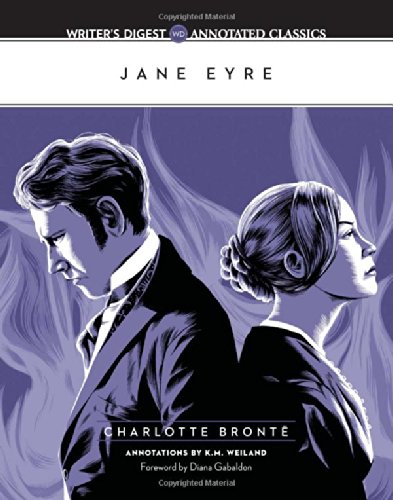
I have now finished reading my ARC of K.M. Weiland’s forthcoming Jane Eyre: Writer’s Digest Annotated Classics. I’ll be posting a review later in the month, so stay tuned for that.

The adjustable desk is working out very well, and I’m now standing for longer between rests. At work, I read a post from a learning and development blogger in which he discussed his experience with his standing desk, which he described as continual fidgeting.

He uses a kitchen stool to take a periodic break from standing and has discovered that he can’t write while standing (!) Thankfully, that hasn’t been my experience.

CanWrite! 2014 was a great time, as usual. I’ve been blogging the panels, sessions, and workshops I’ve attended on a weekly basis.

Another piece of exciting writerly news arrived when I returned home from the conference: another speculative short story, “On the Ferry,” made it into the top ten in the When Words Collide writing contest.

This means I’ll appear in their chapbook anthology, In Places Between, though I’ll have to wait until the conference to find out if I’ve placed. Still. Squee-worthy.

Last month, I had a blogging disruption around the arrival of my desk and spent most of my non-blogging writing time working through Initiate of Stone, all of that work in long hand. Though I completed a lot of work on IoS, I wasn’t able to capture a word count from it.

In last month’s update, I mentioned I would be getting back to countable writing.

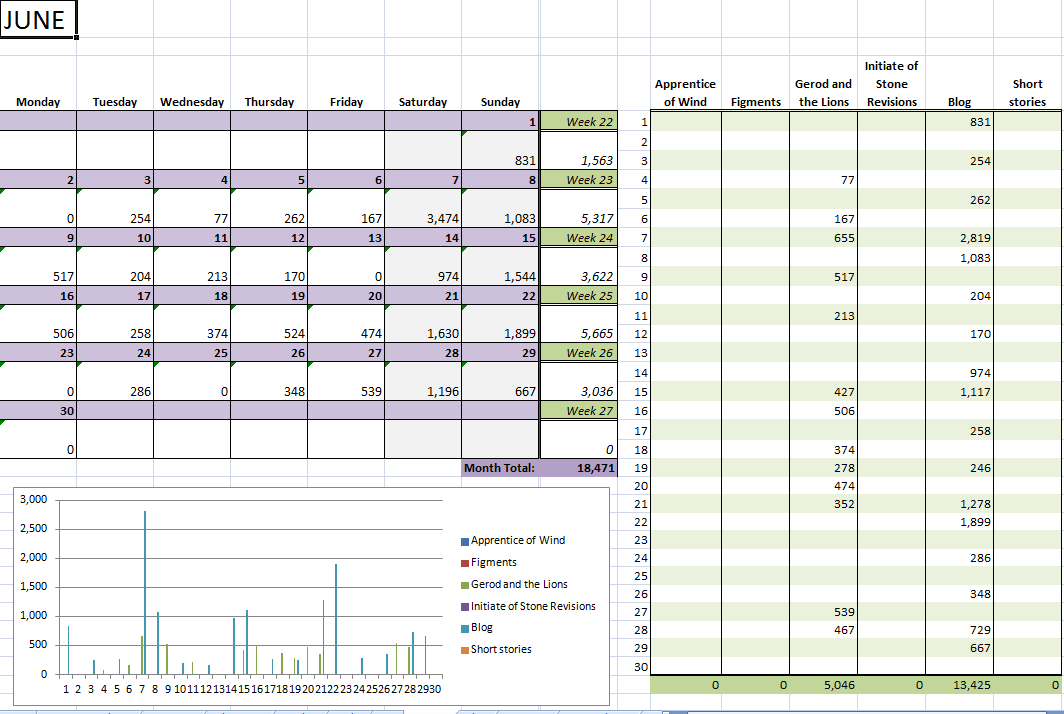
June's writing progress

June’s total word count: 18,471!!!!!

13,425 of those words were on my blog, but 5,046 were written in Gerod and the Lions. I set myself a goal of 5k for the month on that project, and I made it. The draft is now just over 10k words and I’ll have a workable draft by the end of the year 😀

I only just started working on Figments (my NaNo project from last year) as I had worked on IoS last month. In all fairness, I have a little more to do with Figments than I had to do on IoS.

First, I’m mapping it. This is something I picked up from reading Donald Maass’s The Breakout Novelist. For each chapter, I list the title, page count, word count, the first and last lines (both hooks, one to draw the reader into the chapter and the other to propel the reader onward), the purpose of the chapter, in story terms, the internal and external conflicts, and finally, what changes for the story, and for the POV character as a result of the chapter.

These are actually from several separate exercises in Maass’s workbook, but I’ve cobbled them together to create my map. These are like index cards and I can rearrange them as needed when I work on the structure of the story. I can see where I might have to divide longer chapters, and fairly easily pick out plot points, pinch points, reversals, etc.

Once I get the mapping done, I’ll fiddle with Figments’s structure and tighten things up, work through a beat sheet ala Roz Morris, and finally reverse engineer the plot with Victoria Mixon’s holographic structure.

June has taught me that I can’t draft one project and then work by hand on another project simultaneously. I’m going to try alternating and see how that goes.

And that is all the Writerly Goodness I have for you tonight.

How are your works-in-progress coming, my friends?

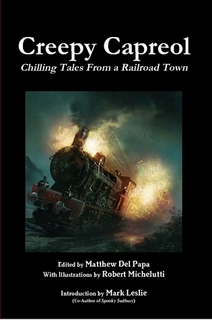
Coming up this month: An interview with author and editor Mat Del Papa on his new anthology Creepy Capreol, I take another shot at the writing process blog hop, the review of Katie’s book, more CanWrite! reportage, and a couple of poems with creation stories.

The Next Chapter

CanWrite! 2014: Publisher Panel, June 20

Christie HarkinCraig PyetteHalli VillegasPanellists: Christie Harkin, Lorimer; Craig Pyette, Random House; Halli Villegas, Tightrope Books.

Moderator: Sue Reynolds


SR: What would make you shout “Eureka!” if it crossed your desk today?

CP: If we’re talking fiction, I’m not likely to shout right away, but something fresh, or new, would make me pay attention.

HV: The writing has to be excellent. The writer has to be willing to work hard in the editorial process. I like unique settings, LGBT, quirky, diverse books. In our best essays anthology, there was a piece about hospitals that was fascinating.

CH: I have a spreadsheet with tic boxes. I have to check off all the boxes to consider the piece. It has to fit into one of our current series, have an urban setting, preferably in the downtown core, it must be edgy, realistic, modern, and not elitist. If I receive something that meets the criteria, I’d shout “Eureka!”

SR: How many books do you consider from your respective slush piles? How do you prefer to be approached?

CP: If you want to submit to a larger house, get an agent. Most of what we produce comes to us through agencies. With regard to your first question, it would be close to none. I can think of one book we accepted from the slush pile. It was non-fiction about the intersection of gun culture/manufacture and hip hop/urban culture.

HV: Every season, there’s at least one book I find in the slush pile. We’re a small press and periodically closed to submissions. Sometimes we put out a call for an anthology. Our most recent was for mystery stories. We also accept projects though grants, like the OAC’s Writers Reserve. If I like the work, I’ll get in touch.

CH: I’ve been with Lorimer for eight months and before that, I was with Fitzhenry & Whiteside. At Lorimer, there is no slush pile. When the list is specific, the submissions are low. We ask for specifics. Read the submission guidelines.

SR: How do you make a business case for a book? In other words, what happens after “Eureka?” How do you sell a book?

CP: The business case is part of the eureka moment. We have to see that there is a robust audience for the book. We talk a lot about comps.

HV: Comps are the first thing sales asks for. Tightrope has built its own market. Readers say, “I trust their aesthetic.” We have our annual poetry and essay anthologies, we’ve published material on plus-sized women. We’re not necessarily focused on the market in general, but on our audience. We published a book titled, How to get a Girl Pregnant, about a gay couple trying to have a baby. The author needs to be part of the process.

CH: We also want proactive authors. They have to be willing to attend conference, Word on the Street, commit to local promotion. The biggest market for kids books is in schools and libraries. Take a look at the curriculum and write book club-like content for teachers so they can teach the novel in class. There was a book about Jacques Plante, but it was too focused and a lot of the kids it was aimed at wouldn’t be able to relate. This morphed into a book about hockey safety in general and how players have contributed to innovation over the years. The revised book had a more universal appeal.

SR: Publishing is a business. You know what you’re looking for. What about international rights and contracts?

CH: If you don’t have an agent, you don’t have any negotiating power. You probably don’t have the knowledge, or the connections. Think seriously before you sign a contract.

HV: We had a South African author who wanted to publish in both countries. I have a North American and European distributor. I don’t like being limited to Canadian rights only. It’s a smaller market. The first print run is 600-1000 books. We’ve just added ebook rights as well. We don’t do commercial fiction, however.

CH: You want your publisher to contract for US rights. More books will sell in the States than in Canada. Lorimer insists on US rights, in fact. If the author wants to retain them, that would be a deal-breaker.

CP: You don’t want your rights squandered. Ask what the publisher wants to do. Random House has a great foreign rights department, but half of our authors aren’t Canadian. We’re a Canadian-oriented publisher, though. With an agent, the world is their oyster.

HV: Big publishers will have a legal department. I don’t. If things get too complicated, I send the writer to an agent or a lawyer.

CH: Yes, an intellectual property (IP) lawyer.

SR: Let’s open the floor to questions.

Q: What’s your risk tolerance?

CP: Keep in mind that the greater the risk, the higher the potential payoff. Last fall was unusual. We published books on Bobby Orr and Chris Hadfield. Colossal risks, but the payoff was huge, too. Sometimes you blow it, but if you’re passionate, you take the risk.

HV: We don’t have a big budget, so we don’t take big risks in the traditional sense. I like to build the ladder rather than climb it.

CH: At Fitzhenry & Whiteside, I had a lot of latitude. My risks paid off. I’ve been lucky. Lorimer is less of a risk-taker, but we will still weigh the pros and cons before making a decision.

Q: What is the process of getting on the bestseller lists?

CP: If we knew that, we’d all be millionaires. That’s putting the cart before the horse. In 2006 Booknet started tracking sales at the cash register for 90% of the retailers in Canada. The Globe & Mail Bestseller list is based on Booknet numbers.

Q: Does politics play a role?

CP: It’s hard sales numbers.

HV: Do you mean, “it’s who you know”?

CP: Maybe there’s the odd favour.

CH: Maybe we can get the book into a reviewer’s hands.

HV: It’s a chicken and egg thing. Some authors will automatically be on the bestsellers lists. Stephen King, Margaret Atwood, Michael Ondaajte.

Publisher's Panel


And that’s all we had time for.

Next week: Writing Fantasy with Kelly Armstrong!

Thoughty Thursday: Things that made me go hmmmm on the interwebz June 22-28, 2014

Another thoughty week runs the gamut from the sublime to the absurd. Just for you, my thoughty friends 🙂

This is from the learning and development side of my life, but, I figured, why not share the love? The social learning blog offers 22 free elearning and graphic design resources.

Author Media created this infographic that gives you ALL the sizes for all images on the most popular social media. Cheat sheet? AWESOME!

New technology for books! Check out the booktrack. Posted by Laurence MacNaughton on Jane Friedman’s blog.

All work and no play makes Johnny . . . crazy? Watch this TED talk and see what you think:


Five ways animals suffer from mental illness from ted.ideas.com. Phil and I have always been convinced we raise neurotic pets . . .

From the Telegraph: phobias may be memories passed down in our genes from our ancestors. Whoa, dude.

Brainpickings presents the theology of rest. “Rest, instead of being something passive, is actually an act of resistance.”

Try the Celtic version of the zodiac. The Celtic tree calendar from Irish Central.

A literary travel guide to the UK from ShortList.

Ted.ideas.com asks which country does the most good for the planet?

Six sites gain world heritage site status. Discovery news.

How much room would we need to supply the entire world with solar energy? I Fucking Love Science has the scoop.

Have a closer look at Europa with National Geographic. I love Europa. Wrote a poem about her once 🙂

The Atlantic present more of the entrants in the 2014 National Geographic Traveler Photo Contest.

Love pugs? How about Game of Thrones? A couple of creative souls decided to put the two together and this is what they came up with:


HelloGiggles brings us an ode to sloths.

Wired’s absurd creature of the week: the assassin bug. More like creepy creature. Gives me the wiggins.

The truth about public toilet seats from Lifehacker.

And now that you’re suitably grossed out, I shall bid thee adieu!

The best in edutainment. Nothing’s too good for my writerly friends 🙂

Thoughty Thursday

Tipsday: Writerly Goodness found on the interwebz June 22-28, 2014

Happy Canada Day, writerly peeps!

Red-Maple-Leaf-for-Canada-Day

Publishing news of the week: Writer’s Digest dumps Author Solutions. What David Gaughran thinks of the move.

Roz Morris explains how to write from an outline and still be creative. My subtitle: How to bend it like Morris 😉

The third and final instalment of K.M. Weiland’s flat character arc series: The flat character arc in the third act.

MJ Bush wrote a guest post for Writers Helping Writers on how regret can deepen your character’s arc.

Training your internal editor with Mary Robinette Kowal.

Writers, what do you fear? Dan Blank offers some compelling thoughts on how to deal on Writer Unboxed.

66 facts you may not have known about the English language from The Huffington Post.

John Vorhaus lets his wordy whimsy out to play on Writer Unboxed.

14 pieces of brilliant short fiction from Art.Mic.

Five hundred fairy tales discovered in Germany, brought to you by The Guardian. I can’t wait to get into these!

See you on Thoughty Thursday!

Tipsday

Sundog snippet: Another piece of the office puzzle falls into place

Since it’s not the end of the month yet, I’m not going to put out The Next Chapter until next weekend. That way, if anything else happens in the next day or so, I can capture it for you 😉

Also, I’m only going to dole out the CanWrite! sessions once a weekend to draw out the suspense learning. There’s one more panel, two sessions, and the wrap post to go. Why so few? I’ll tell you all about it in the wrap post, which will have some tips for preparing to go to conferences. Stay tuned!

So this is just a quick post to show you that Phil finally installed the new ceiling fan in my office (yay!). Actually, the ceiling fan was purchased a few years ago, when we renovated our bedroom. It’s been sitting around, languishing in its box since then.

You don’t want to know how long it’s been since I renovated my office . . .

I still have to refinish my office door, but that has to wait until I have some dedicated time.

CeilingFanLove

Isn’t she sweet?

It’s much better than the old one (as the Ikea commercial says) which is about to be chucked to the curb. The old one still worked, but the motor had a nasty hum that made me doubt I could safely use it for long periods of time. It’s free to a good home, and I’m sure it will disappear long before garbage day. We have a lot of wise and environmentally conscious scavengers in the area.

And I’ve really needed it this weekend. It’s the first really hot weekend of the year (in the 30 degree Celsius range, plus humidex) and we don’t have air conditioning. It’s made the house bearable.

The gazebo in the back yard is still in a state of chaos and now has wood (from my mom’s deck reno) piled up for storage.

This weekend, Phil and I also went out and priced landscaping stone, crusher dust, gravel, and recycled rubber patio tiles. Over the course of the summer, Phil is going to construct a retaining wall around the patio, filling in the gaps about the concrete footings he poured (and re-poured) last year, and resurface the patio with the rubber tiles.

Then, he’s going to make a raised garden for me in the back yard with the stone, and create a stone (or possibly rubber tile) path between our two sets of entry steps. It’s a lot of work and a fair amount of cash, but if he works away at it in dribs and drabs, maybe he won’t exhaust either himself, or our bank account.

That’s all for today.

See you again on Tipsday!

BTW, like my new bit of Canva art?

Sundog snippet

CanWrite! 2014: How to be your own editor with Farzana Doctor June 19

Farzana DoctorThat’s Dr. Farzana Doctor 😉

Learning to edit your work is learning to know when to let go. Maybe that’s what this workshop should be called: Let it go.

This is what I do. You don’t have to do what I do. Do what works for you in your process, but I hope you’ll find some interesting tips and techniques you can incorporate into your process.

First, a couple of definitions:

  • Prose editing is fine tuning: Spelling, grammar, syntax, usage.
  • Revision is substantive, structural, plot-related.

To start the editing process, you must have a completed piece of writing.

What was your intention in writing the piece? That core intention will guide you in the editing process.

Plan the process

Prose editing checklist:

  • Overused or repetitive words. First identify them. Everyone has her or his words. Then, use find and replace to address them.
  • Useless words (Mel’s note: also called zero words, because you can remove them from the sentence without changing the meaning of it) such as, just, only, that, actually, etc.. If you’re not sure what useless words are, Google it.
  • Grammar tics. Again every writer has a weakness. (Mel’s note: mine is commas. I either use too many or too few.)
  • Passive language. Examples: The biscuit was eaten by the dog (the dog ate the biscuit). She was jumping up and down (she jumped up and down).
  • Telling versus showing. Telling has its place, but avoid it where possible. Check your use of adverbs, adjectives, and clichés. These are often signs that you are telling, rather than showing.
  • Dialogue. Tags – do you need them, or would an action beat be better? Do all of your characters sound the same? Said is just fine. Read it out loud to see if it “sounds” right.
  • I start with editing first, because I find it easier. Some writers may not want to do this because it may mean too many wasted words when the revision stage is reached. Editing first works for me.

Revision checklist:

  • Where does the story begin? Is it too early, too late, is there enough action, conflict?
  • The protagonist. What does he want? What prevents him from getting it?
  • Other characters. If you can take her out of the story and not alter it, she should go. Every character should serve the story. Every character should be real, have a background, desires and frustrations of her own.
  • Keep track of plot and subplots. Structure.
  • Description. Is there too much or not enough?
  • Flashbacks. Do they stall the story?
  • Is the ending satisfying? Is it a resting place?

How to do it:

  • Focus. No distractions. Space. Set time, page number, or word count goals.
  • Separate new writing from editing and revision. Could be different times of the day, or different days.
  • Revision iteratively. Editing as you’re going. Must always make progress, however. S.J. Rozan’s method of Iterative Revision – Bookbaby. Start with previous day’s work, and then move on. It’s like a progressive spiral.
  • Change perspective. Step away. Change your font. Read aloud. Print it out. Draw maps. Pretend you are a reader.
  • Create a visual outline. Literally cut and paste your scenes and chapters.
  • Write a synopsis or jacket copy. Write a logline or tagline. Write a poem. Find your theme.

Asking for feedback

  • Who will you ask?
  • When is the best time to obtain a critique?
  • Be specific about what you want/need.
  • Stay general. When did you stall, get bored, get lost?
  • Receive your critiques without resistance. Set it aside. Decide what rings true. Ask for clarification (do not defend).

The rest of the workshop was spent reading and responding to the participants’ works-in-progress.


I must admit, I haven’t thought of purposefully editing first. I have edited too early before, and regretted spending all that time fixing scenes and even chapters that I would eventually delete. For me, I would think that revising first makes more sense.

Similarly, iterative revision doesn’t work for me. I get caught in an endless loop of going further and further back. It doesn’t prime the pump for me, it engages my inner editor too early in the writing process and stalls me.

Overall, I found Farzana’s workshop informative and practical.

I hope that you, too, will find something useful that you can use in your daily practice.

Thoughty Thursday: Things that made me go hmmmm on the interwebz June 15-21, 2014

I think I have to declare this the week of TED. A fair amount of TED talk here. All excellent, as TED talks tend to be.

Just a bit of politics here. The Northern Gateway pipeline is that other pipeline, but it’s a Canadian thing, so some of you may not have heard. Here’s an interesting article about the lies that have been told in an attempt to push the project through.

Kudos to the UK where teaching creationism is now banned in state-run schools. I Fucking Love Science.

A man dedicated to fighting woo: The Huffington Post interviews James Randi (The Amazing Randi).

Just to offer some balance, a post on meditation from one of the woo-pitchers Randi debunks. Actually, I don’t think Randi has an issue with meditation, or its potential benefits, just all the other stuff that tends to get glommed in with it.

More IFLS: How neurons decide whether you cope or become stressed.

TED talk from David Anderson: Your brain is more than a bag of chemicals.

And related, from the Wall Street Journal: Our brains are made for enjoying art.

A TED talk from Mihaly Csikszentmihalyi on the secret of happiness, flow.

Another TED talk from Steven Johnson: Where good ideas come from.

TED talk from Colin Stokes. What are today’s movies teaching our kids? This kind of goes with the article on strong female characters from this past Tipsday. Hint strong doesn’t equal pew-pew-pew!

Jim C. Hines responds to a blog post entitled “The naive idiocy of teaching rapists not to rape.” Read to get the goods.

An interesting article from Irish Central on the black Irish and their history.

Entertainment Weekly interviews David Benioff and Dan Weiss about the season 4 finale of Game of Thrones.

And Maisie Williams on her character, Arya.

One of my favourite pair of singer/songwriters: Dala 🙂


And just for laughs: What do you Poupon?

It was a fairly thoughty week! Enjoy, my friends 🙂

Thoughty Thursday