Tipsday: Writerly Goodness found on the interwebz, Nov 9-15, 2014

Last week’s big publishing news in The Globe and Mail: Where is Simon & Schuster heading?

What Amazon’s strategy may mean for publishing today. Someone saw this coming. Rebecca Allen. The Digital Reader.

Are there things more important to writing than talent? Anne R. Allen says yes. Yes, there are.

Roz Morris explains how a good editor helps you to be yourself.

How much realism does your novel need? K.M. Weiland.

Pantaphobia. That’s it! Fabulous post on Writer Unboxed about fear and the writer by Myra McEntire.

Sometimes, you’re going to hate your work in progress. Read Chuck Wendig’s thoughts on how to get through it (over it? around it?).

Young writers working together to reach their NaNoWriMo goals. CBC.

Can you afford to be a writer? Deborah Mundy for The Toronto Star Books.

Why writing shouldn’t be your first career. ALLi.

Neil Gaiman’s eight rules of writing. Brainpickings.

Anne Lamott on the true gift of friendship and the uncomfortable art of letting yourself be seen. Brainpickings.

Virginia Woolf on how to read a book. Brainpickings.

How to build a fictional world with Kate Messner. Ted.ed.


How writing fiction is helping people with mental illness. CBC.

That’s all the tips I have for you this week.

See you on Thoughty Thursday!

Tipsday

WWC 2014, Day 3: Querying your YA novel

Panellists: Jacqueline Guest, Danielle L. Jensen, Jessica Corra, Shawn L. Bird, Karen Bass

Jacqueline GuestDanielle L. JensenQ: Do you query a trilogy?

DJ: It depends on your genre. Some say your novel has to be a standalone, but I’ve been successful querying a trilogy.

JC: It’s okay to mention that your novel has series potential, but you can go too far with this. I was once queried with a nine book series. That was too much.

SB: It’s good to know the career potential of the author, though.

DJ: Focus on one book in your query.

JC: It’s a business letter.

KB: It’s your pitch. Three sentences. Short, punchy, and pithy.

JC: Think about the backbone of your book. That’s your through line.

JG: You’re not selling to a reader. You’re selling to an agent or publisher. Don’t tease.

SB: The basic structure of a query letter is three paragraphs: pitch, comps, and bio.

JC: You need to mention genre, word count, and title.

DJ: You Jessica Corracould write: I am seeking representation for TITLE, a GENRE novel, complete at LENGTH (in thousands of words, rounded to the nearest thousand). I actually got my agent through a logline contest for Ms. Snark.

JC: Sometimes you don’t need an agent, though.

KB: Small Canadian publishers, no. Big publishers or genres, yes. Anything in the States, yes.

DJ: I’d die without my agent. She takes care of things

like foreign riShawn L. Birdghts. It really depends on your skill set.

SB: Sometimes, it depends on the agent.

DJ: I’d recommend Query Tracker.

JC: Jim Butcher proposes this formula for youKaren Bassr log line: *WHEN SOMETHING HAPPENS*, *YOUR PROTAGONIST* *PURSUES A GOAL,* but will he succeed when *ANTAGONIST PROVIDES OPPOSITION*?

JG: Spell check, for God’s sake. You have two sentences to hook an agent or editor.

DJ: Your first five to ten pages must be perfect.

JC: We know you’re human, though. We’ll overlook something small.

JG: There are lots of library books that will help you.

DJ: Online critique groups can help as well.

Q: How do I know the agent is reputable?

DJ: Writer Beware, Preditors & Editors, and Absolute Write are three sites where you can check out questionable agents, agencies, or scams. If you post on social media or forums, don’t bitch about being rejected.

Q: How many queries do you receive and how many of those do you read?

JC: We have readers, so I don’t see them all, but everyone I receive, I read.

Q: You’ve published several books. Do you still slave over your letters?

JG: Yes. Every time.

Thoughty Thursday: Things that made me go hmmmm on the interwebz, Nov 2-8, 2014

Not a lot this week. Travelling and NaNo are taking priority.

Five tips from the stoics about happiness. The Business Insider.


How introverts react to the world. The Huffington Post.

How we’re wired. A video on left-handedness from It’s OK to be Smart.


Bizarre cloud formation seen in the Australian sky. IFLS.

The wildlife overpass near Sudbury is in the news. CTV.

See you Saturday!

Thoughty Thursday

Tipsday: Writerly Goodness found on the interwebz, Nov 2-8, 2014

First, it’s Remembrance Day.

Remember our armed forces and veterans and the sacrifices they’ve made for us.

Thank you, from the everywhere of my heart.

http://www.cbc.ca/news/canada/remembrance-day-draws-huge-crowds-as-national-war-memorial-rededicated-1.2831009


K.M. Weiland discusses random story elements in her most common writing mistakes series.

Her weekly vlog focuses on scene breaks and including the right number in your story.

Katrina Kittle writes about how to facilitate your writing practice. Writer Unboxed.

How to invigorate your endings. Mythcreants.

Women heroes in pop culture, by Nina Munteanu.

DIYMFA’s master class with Jane Yolen.

Changing the way your world moves, by Brandon Kier on Mythcreants.

Patrick Rothfuss responds to the Ivory Tower.


How Hugh Howey Writes. Copyblogger.

Guy Gavriel Kay reflects on his apprenticeship. The Guardian.

Margaret Atwood on ageing, generational inequality, and what she’s working on now. The New Statesman.

Kurt Vonnegut on the shapes of stories:


Camilla Gibb on making a living as a writer. The Globe and Mail.

Molly Crabapple’s 15 rules for creative success in the internet age. Boing Boing.

More Molly at XOXO:


Why we should all be reading more poetry. Arts.Mic

See you on Thoughty Thursday!

Tipsday

WWC 2014, Day 2: YA and the tough stuff

Panellists: Kimberly Gould, David Laderoute, Aviva Bel’Harold, Michell Plested
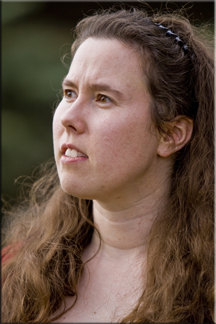
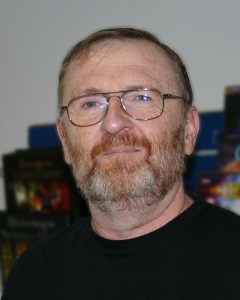
Kimberly GouldDavid LaderouteAviva Bel'Harold


Michell PlestedQ: What language do you use?

DL: Keep your audience in mind.

MP: Look at Harry Potter. The Dursleys made him live under the stairs. That’s abuse, but it was painted realistically.

DL: Neil Gaiman thought of using homeless characters in Neverwhere, but reconsidered.

MP: Whatever you choose to portray, it can’t be gratuitous. The character and the character’s circumstances have to be essential to the story.

Q: Is there a difference between the Canadian and American YA market? I was at a Kelley Armstrong session and she said that the only thing you don’t include is boring.

AB: I don’t notice a difference myself.

DL: Some publishers may ask you to eliminate the profanity in either country. That’s okay, you’re saving words. I know kids swear, but we write dialogue that simulates reality. Real world dialogue would sound horrible.

Q: Don’t readers need to see themselves on the page, though?

MP: Yes, but a book that ends hopelessly is dissatisfying.

AB: Most teens want hope.

MP: No one wants to end up homeless, addicted, or any of the other hard things we write about. They want to know there’s a way out.

Q: Beyond a sense of belonging, do you offer solutions in your novels?

AB: Don’t set out to write a novel with a message. It can come off heavy-handed.

KG: Present options in your novel, not right and wrong.

DL: Solutions are facile. Even young readers see through that.

MP: If you offer a solution, it shouldn’t be easy. If your character is smart and capable, they’ll keep trying. The struggle is the thing.

Q: Horrible things are still happening in the world. Should we show people responding?

MP: The character may be too close to the situation to understand it, but the reader should be able to pick up on it (dramatic irony).

KG: Perspective or point of view (POV) is basic storytelling. Be honest to your story. Make it true.

DL: You can write about difficult situations. There are two books, It’s kind of a funny story by Ned Vizzini, and Thirteen Reasons Why by Jay Asher that treat teen suicide respectfully. What about the topics of child slavery, child soldiers, or gangs? These are issues that should be addressed.

MP: It’s not writing the story that’s difficult, but resolving myself to writing it. The Boy Scouts are a recruiting ground for child soldiers, but how do you write about that? It’s an inherently hopeless situation.

AB: Abuse victims have similar “unseen” problems. I couldn’t address them myself. I don’t have the experience or context to do it justice.

MP: It comes down to passion. If you’re passionate about something, then write it. Don’t write it because it’s a “cool” or “hot button” topic.

Q: There are books that address difficult issues out there. Deborah Ellis writes about the third world in her books and Sharon McKay tackles child soldiers.

AB: How do we bring these subjects to our readers with sensitivity?

MP: In one of my books, I address bullying. One of the characters is a foster child and the protagonist doesn’t understand. The story is about coming to that understanding and learning compassion.

AB: I think one of the problems is that we can write great books, but kids are reading less. We have to get them back and get them reading.

DL: Can we kill characters in YA?

AB: It’s life. We should not shy away from it.

KG: You have to be careful, though. Kill the right character for the right reason. Think of The Bridge to Terabithia by Katherine Paterson.

AB: There could be a backlash. Consider Veronica Roth and the Divergent Series.

DL: Ultimately, it has to have meaning. It has to serve the story.


Next week: Querying your YA novel.

See you on Tipsday! Now, I’m off to NaNo-land 🙂

Thoughty Thursday: Things that made me go hmmmm on the interwebz, Oct 26-Nov 1, 2014

Last week, it was the attack on Parliament Hill that was the big news. This week, and many would say even eclipsing last week’s drama, is Jian Gomeshi. If you’ve been living under a rock somewhere, I’ll just let you catch up.

http://www.cbc.ca/news/arts/jian-ghomeshi-host-of-q-no-longer-with-cbc-1.2813670

http://www.huffingtonpost.ca/2014/10/26/jian-ghomeshi-cbc_n_6050220.html

http://sexgeek.wordpress.com/2014/10/27/poor-persecuted-pervert/

http://theovercast.ca/real-take-away-message-news-jian-ghomeshi/

http://ellebeaver.com/2014/10/27/how-not-to-react-to-jian-ghomeshis-pr-statement/

http://whatever.scalzi.com/2014/10/31/jian-ghomeshi-and-the-women-he-knew/


When reporting harassment, you are not the problem. Mary Robinette Kowal.

The secret dual lives of people with mental illness. Behold.


To counteract all that: The science of happiness. Soul Pancake.


Ursula K. LeGuin on aging and true beauty. Brainpickings.

The first taste of freedom of six animals caught on film. IFLS.

The World Trade Centre ship mystery solved. IFLS.

Debris from Amelia Earhart’s plane found. IFLS.

Notebook from the Scott expedition discovered and restored. IFLS.

Archaeologists discover mystery fairies and a buried pagan cross in Wicklow. IrishCentral.

What happens to blood when viper venom is added to it. Rare.

Can we get Ebola from dead bodies? Ask a mortician.


NASA spots jack-o-lantern in the sun in time for Hallowe’en. IFLS.

NASA 360 presents: from science fiction to science fact.


The warped astrophysics of Interstellar. Wired.

Michio Kaku talks about the possibilities of the future. YSNews.

Scientific explanations for monsters. IFLS.

The creepiest looking animals in the world. IFLS.

These are some creepy photos. Whether or not they are truly ghosts captured on film, well, I’ll leave that up to you.

Video of same:


The Celtic roots of Hallowe’en. Jodi McIsaac.


A squirrel drunk on fermented pumpkin attempts to climb a tree . . . Cottage Life.

Penguin bloopers 🙂


Daniel Radcliffe raps for Jimmy Fallon. Huffington Post.

Get thoughty with it 🙂

See you Saturday!

Thoughty Thursday

Tipsday: Writerly Goodness found on the interwebz, Oct 26-Nov 1, 2014

K.M. Weiland uses Maslow’s hierarchy of needs to show how your characters’ goals can be meaningful.

Why you might be ruining your story’s best scenes. Katie’s weekly vlog.

Roz Morris writes about how to handle the passage of time in prose.

Four ways to write a killer plot twist. There are no rules blog. Writer’s Digest.

Is writing a matter of magic? Chuck Wendig’s Terribleminds.

Creativity isn’t what we think it is. Kevin Ashton. Medium.

Bad writing advice explained by Mary Robinette Kowal.

Neil Gaiman reimagines Hansel & Gretel. Brainpickings.

How NaNoWriMo can improve your writing process. Anne R. Allen.

Jaimie Raintree explains how NaNoWriMo can change the way you write throughout the year. Thinking through our fingers.

More NaNo prep from BookBaby blogs.

What really distracts NaNo participants. There are no rules. Writer’s Digest.

Why Jeff Goins will never use Microsoft Word again.

Kurt Vonnegut on the shapes of stories.


Beowulf, read in the original Old English. Open Culture.

And leaping forward a few centuries, here’s what Shakespeare sounded like in Elizabethan English. Open University.


Five examples of how the languages we speak can influence the way we think. TED blog.

Learning new words stimulates the same parts of the brain as sex 🙂 IFLS.

Know an Outlander widower? This post is for him 😉

This short film is a beautiful interpretation of what Rosetta might help us achieve. I put it in Tipsday, because it is awesome storytelling.

The top 100 science fiction themed songs of all time. i09.

SyFy focuses on the genre that made them a specialty channel. i09.

Enjoy!

Tipsday

The Next Chapter: October 2014 update

The month’s been a bit of a wonky one.

I started out working on Gerod and the Lions, but with NaNoWriMo coming up, I started to work on my outline for my project more and more. That work was all done by hand in my handy-dandy Moleskine notebooks. Handwritten words are a pain to track, so I don’t.

I don’t outline like a normal person. Actually, to put it a different way, I don’t think there is a normal way to outline. Everyone will do it differently.

my outline (such as it is)

I start sketching things out, make notes, what to research, and then I’ll get to a point in the story that I have to figure out a few things. So I’ll leave the “outline” and start on a character’s backstory, because I need to know what it is. Who’s the antagonist? What’s her or his motivation?

And then I’ll go back to the outline until the next gap emerges. I’ll deviate to fill it, and so on and so forth. I finished off one notebook and started another. I hope to have time to transcribe my notes before I’m neck deep in word deficits.

The blog was my big word-producer again this month. No surprise there.

The only other thing I worked on was a short story for a contest. Sadly, I realized too late that the story was double the length of the word limit set out in the contest rules. Doh! Homer moment. I didn’t have another suitable story to offer up, so I let it go. There was an entry fee anyway, and I try not to enter anything with an entry fee these days.

Fortunately, I’ve identified another market for the story and, as ever, will try again.

Everything else went by the wayside, Initiate of Stone, Apprentice of Wind, Figments, everything. This happens when I get focused.

So this is how the month looked, production-wise:

October's writing progress

GatL – 2,852 words. Short of the 5,000 I was aiming for, but my new story is kind of obsessing me right now. That’s a good thing 🙂

Blog – 11,766 words.

Short stories – 49 words. There was a little additional writing, and a little editing.

Total – 14,667 words.

I’ve got the Excel all revved up for NaNo, with an extra project and column for November.

Eeeeeeee! Let the writing begin!

So far, we’re on track for continuing with the blogging, even during NaNo. I hope it lasts, but if it doesn’t, forgive me, won’t you?

Anyone else out there doing NaNoWriMo?

WWC 2014, day 2: Business planning for creative people with Sandra Fitzpatrick

Sandra Fitzpatrick

Write first. You don’t have a business without something to build it around.

The Business Plan

  • Executive summary
  • Industry and market analysis
  • Competitive analysis
  • Marketing
  • Operation
  • Financial

Let’s look at each element in more detail.

Executive summary

This is written last but presented first. It contains the high points of all the other aspects. It’s as long as it needs to be.

Industry and market analysis

How will you make income? Are you aiming for self-publishing or a traditional deal? If traditional, are you aiming for the big 5, or a small press? What is your genre (prose, poetry, or drama)? What resources will you need (editors, cover artists, layout, etc.)? What is your social media plan and/or platform?

Competitive analysis

First, are you competing or collaborating? Know how to get your ISBNs in Canada and in the US. Also how will you get your ITIN for US sales? Where will you publish? What magazines, anthologies, and contests will you submit your work to? Are you querying agents or sending proposals to publishers? Do you know how the slushpile works? Understand copyright in your country of publication. Understand trademark and what it means to be in the public domain. How do you regain your rights? Understand basic contract law.

Marketing

How will you use social media to market? What festivals, conferences, and conventions will you attend? Will you facilitate workshops or critique groups? Will you give public readings? If so, how many and where? How much money will you invest in travel? Will you be setting up a podcast or YouTube channel? How much money will you invest in promotion?

Operation

Set your goals? How many words will you write per year? How many novels will that translate into? How will you track your productivity? How will you track your submissions? Make sure you back everything up.

Financial

If you do public readings, facilitate workshops, or sit on panels at conferences, investigate the options for charging for your time. Will you be able to make a living by royalties? Keep receipts and make invoices for everything. Filing is not a four-letter-word. Consider crowdsourcing through Kickstarter, Indie-go-go, or ongoing income via Patreon. Set aside 35% of any income you receive for taxes or investment.

Sandra then went through an example of a business plan to illustrate.


Next week: YA and the rough stuff. Chronologically, there was a Brandon Sanderson session in there, but I attended three of his sessions altogether and I’m just going to cover them all in one abbreviated post. I didn’t take notes. I just took it all in 😉 So that one will be me fangirling just a bit and offering a few references.

After YA and the rough stuff, I have Querying your YA novel, and Marketing your book, then Brandon Sanderson, and finally, the wrap post. So we’re very near the end of the WWC 2014 reportage. If I can keep this up during NaNoWriMo, we should be finishing up with When Words Collide on the first weekend of December. Then I’ll fill you in on the Humber workshop I’m attending next week and whatever else comes my way in the meantime.

Next up: The Next Chapter: October 2014 update.

Thoughty Thursday: Things that made me go hmmmm on the interwebz, Oct 19-25, 2014

Thoughty Thursday is all over the map this week. It’s just the kind of week we had, here in Canada.

This was the big news in Canada last week: The lone gunman who attacked Parliament Hill. CBC News.

Mother Jones on how we did with the reporting of the incident.

Our heroes:

Nathan Cirillo The Toronto Star

Patrice Vincent CBC

Kevin Vickers CBC


You are your own damned permission slip. This post is one of the reasons I love Justine Musk. You go girl. Hell, I go, too!

I don’t even . . . Why are people making such a fuss about Renee Zellweger’s new look? Plastic surgery shaming? WTF?

Your brain on dreams, with Michio Kaku. I love this dude. Big Think.

End the stigma surrounding mental illness.


The Business Insider posts 20 tips for sitting at your desk without hurting your back. I had an ergonomic assessment at work a few weeks ago and the video aligns perfectly with what I was told.

Fibromyalgia isn’t “all in the head.” The Liberty Voice.

The Cryptik Movement speaks about the consciousness of trees. This is really something.

I’m not afraid of spiders, but the Goliath bird-eating spider makes me shudder. IFLS.

The tagline heading around with this next IFLS feature was, the Scottish invented sex! A Scottish fish, that is 🙂

The strange beauty of the deep ocean. IFLS.

Are we getting closer to a green energy breakthrough? IFLS.

A working hover board? Back to the future! IFLS.

The real cyborgs: where wearable technology is taking us. The Telegraph.

Lindsey Stirling does a steampunk western video for Roundtable Rival.


Sadness, now. Photographer says goodbye to her beloved pooch after sixteen years.

See you Saturday with more WWC 2014 reportage (I hope).

Thoughty Thursday