Some of my favourite books on the craft

Several months ago, I read a post called “Confessions of a Craft Book Junkie.”  I had no choice but to comment, because reading books on the craft of writing is an addiction for me.  I’m always buying more!

I have no idea what brought this issue up for me again, but having thought of it, I’ve decided to share some of my favourite craft books with you, and may you reap their myriad benefits! I don’t care if you get them as ebooks, or from a used book shop.  Just get ‘em 🙂

In the beginning …

There was Natalie GoldbergWriting Down the Bones and Wild Mind were the first two books I read about writing, and they’ve stuck with me through the years.  Goldberg espouses a philosophy of “first thoughts.”  Writing in your journal first thing when you wake up.  Sound like morning pages to you?

Goldberg introduced me to free-writing, and weaves in wonderful exercises for journal writing with Buddhist philosophy.  Monkey mind and wild mind is a concept I come back to again and again.  Monkey mind is the nattering, distracted place in our heads we occupy most of the time. 

Wild mind … well, draw as big a circle as you can on a piece of paper.  Put a wee speck of a dot in the middle of it.  The dot is monkey mind.  The rest of the circle—you guessed it—that’s wild mind, the cosmic consciousness that will endow your writing with greatness.

The key is to let go.  Don’t worry.  Don’t pin all your hopes on the greatness you might achieve.  Just be in the moment and do it.

Word after word

Heather Sellers two books: Page After Page and Chapter After Chapter really changed my writing game.  It was time for some tough love, and Sellers delivered.  She was the first author I read who asked the question: do you want to be a writer, or are you a writer?  She made the distinction very clear.

Wanting to be a writer means that you’re letting things get in the way, making excuses, because the phrase is always followed by the word “but.”
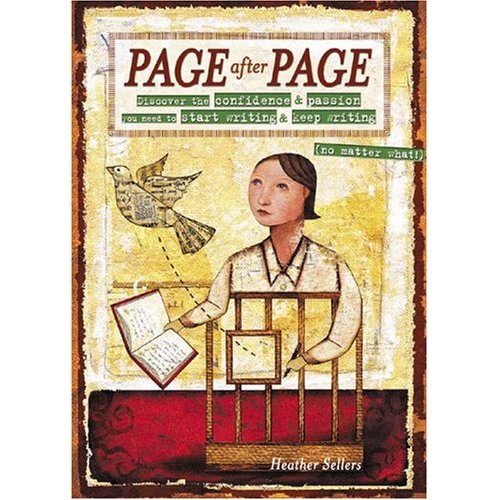
If you are a writer, you write.  You write every day.  You’re dedicated to your craft and you don’t let excuses get in the way.

Sellers also writes about her struggles, how the disapproval of peers and professors affected her, how relationships, good and bad, can influence your work, and how serious life incidents like car crashes and disease can change things forever.

In the end, you can only keep writing, word after word, page after page, and chapter after chapter 🙂

The Maass Oeuvre
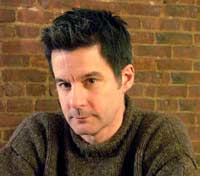
Donald Maass is an industry expert and he turned his expertise into several wonderful books.

His first, The Career Novelist, delved into the changing face of the publishing industry.  No longer the land of monster advances, runaway auctions, and multi-book contracts, Maass discussed the kinds of writers, the kinds of agents, the kinds of editors, and publishers that were emerging, how they might survive the new era, and he offered a lot of practical advice about the mathematics of publishing (what do the numbers mean and why should I care?).

In the current market, this book has lost some of its relevance, but I would argue that it is still an important read.  Understanding the changes that led to the current state of publishing offers the reading writer insight.  Learning from history, we hope not to repeat it.

Writing the Breakout Novel gets more into the mechanics of how to write a damn good novel.  Using his personal experience and that of some of his well-known clients, Maass explains what agents and publishers are looking for, and gives the reader tools to achieve their goals.

The Fire in Fiction is more of the same, but deeper.  Maass really asks the writer to dig deep in this one and offers exercises to deepen your understanding of exactly what it is you’re doing.  Analysis.  Critical thinking.  If you’re willing to work for it, Maass tells you how to write a novel that will WOW.
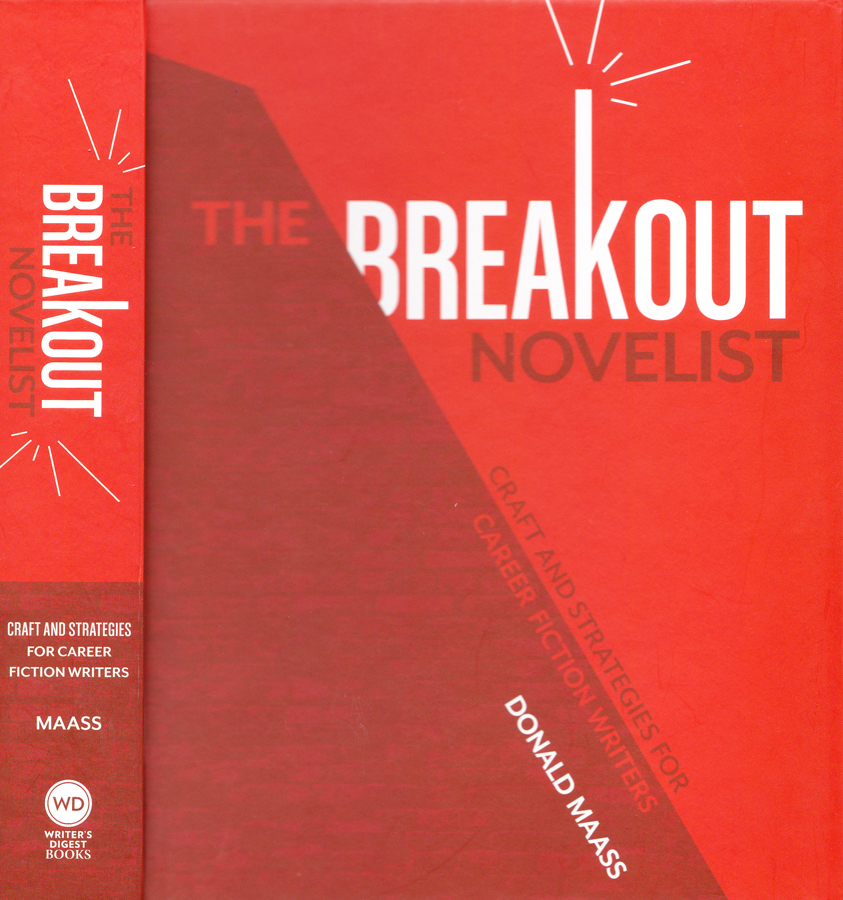
Finally, The Breakout Novelist, Maass’s most recent publication, is more of a workbook and reference than some of his other books.  It combines the best of Writing the Breakout Novel and The Fire in Fiction with extra exercises.  If you’re having trouble with a particular aspect of your novel, flip to that section and start working through the exercises.

Obviously, I’m a fan.

I’ll have more of these coming in future months.  I just thought I’d start with what I think are the best of the best 🙂

What are some of the craft books that you value and why?  How did they speak to you?  And as always, like, comment, share, subscribe!

World info, or the boring stuff that worldbuilding sometimes entails

Ok, so now that I’ve announced that I’m going to bore you all to death, you can all run away and do something fun with your Friday nights …

Last time, on WIP (before we were so rudely interrupted by the outage): The history be done!  For now.  You never know, I may have to go back a write a novel about the past of Tellurin someday …

As I’ve mentioned often, I’m a pantser.  I start with an idea, I write though the first draft, then I go back and start playing.  I do character sketches first, then history, then I start getting into the systems.  This post is about how the world works.

In reality, I know that a world like this probably can’t exist.  It’s too convenient.  Everything lines up exactly.  But this is a fantasy people.  And these are the rules as I’ve made them.

Tellurin has:

1 sun, very similar to earth’s sun, a young ‘un.

1 sunspan (or sun) = 364 dayspans, or days (exactly 13 moonspans of 28 days a piece)

A day is 24 hours, an hour is 60 minutes, a minute is 60 seconds … Gotta have something familiar!

1 moon, large enough to have the thinnest of atmospheres, completely covered in ice.  Looks blue because of the reflected light from Tellurin.

1 moonspan (or moon) = 28 days

There are 13 moons in a sun and they are called:

Isto, Sein, Terza, Quade, Cinquo, Sexta, Septo, Octa, Ninte, Dente, Isten, Seinen, and Terzen

The seasons are:

Shoudranya, the season of spring forth (most people don’t use the old names—they’re considered “stuffy”) comprised of Isto, Sein, and Terza

Zaidranya, the season of the bright sun comprised of Quade, Cinquo, and Sexta

Mardranya, the season of leaf fall comprised of Septo, Octo, and Ninte

Vedranya, the season of storms comprised of Dente, Isten, Seinen, and Terzen

And here’s where my paganish leanings enter the picture.

The sun begins in Shoudranya when the rains stop and the growing things begin to spring forth again.

On the first day of Isto, the festival of Kiestaya the awakening is celebrated.  Imbolc-like.

On the first day of Terza, the festival of Anestaya, the engendering or sowing is celebrated.  Day and night are equal.  Somewhere between the vernal equinox and Beltaine.

On the first day of Cinquo, the festival of Huostaya, the early harvest, is celebrated.  The longest day.  Summer solstice and Lunassadh-like.

On the first day of Septo, the festival of Uistaya the second harvest is celebrated.  Day and night are once again equal.  Autumnal equinox and Octoberfest-like.

On the first day of Ninte, the festival of Sestaya the final harvest is celebrated.  This is when the final slaughter is accomplished.  Samhain-like.

Vestaya or the closing, the only moveable festival, is observed on the first full day of storms.  Occasionally it can even occur before the final harvest.  Remembrance day-like.

The last festival of the year is celebrated on the first day of Seinen: Reshtaya the turning.  The longest night, though no one living can tell with the persistent cloud cover of Vedranya overhead.  Winter solstice-like.

Ferathainn is born on Sestaya.

Each moon is comprised of four seven-day weeks:

Selneth, the full week; Gebbeth, the waning week; Kiereth, the dark week; and Ebbeth, the waxing week.

The days of the week:

Sunday, Moonday, Stoneday, Windday, Waterday, Fireday, Spiritday

The older names for the days of the week:

Zaides, Azures, Telles, Zephes, Auges, Flames, Spirites

A date might be read Kiereth Zaides of Cinquo (Sunday of the third week of the fifth moon).  This also might be more commonly called Dark Sunday of Cinquo.  Most people no longer remember the old names or bother to keep that knowledge alive.

This was one of the things that I had to know about my world.  No one ever states or writes a date in the novels.  This is just for me to be able to keep things straight.  I even have a document in Word that I’ve set up as a calendar, so I can keep track of when things are happening.

I actually enjoy stuff like this.  I’m that much of a geek.

More systems next week (I can hear the screams already), but these systems will be more interesting.  I’ll get into the magic system, and this will be a little bit more like a story than a list of stuff 🙂  If there’s room, I might even fit in something about the religions of Tellurin.

And if I can get my brilliant man to fix my scanner, I might even share my rudimentary map of Tellurin.

I plan a little worldbuiling holiday too.  I have things to share about my current draft and the bizarre way it’s panning out.

So there’s good stuff ahead on WIP.  Stay tuned.

Writerly Goodness signing off.  Have a fan-tabulous weekend!

Work-Life-Creative balance … and resources!

I was inspired to write a little about work-life balance because of something my manager sent out to the team last week.

It was his newsletter from David Irvine, titled Quantity or quality of life, what really matters?

In the article, David recommends the following:

  • Relax, stop entering data in the computer, and take a deep breath;
  • S-l-o-w d-o-w-n long enough to actually look into the eyes of a person you care about and experience the love between you;
  • Smile at a stranger;
  • Stop and let the beauty and magnificence of a plant in your office be a part of your awareness;
  • Offer a word of acknowledgement and encouragement to a colleague;
  • Do something that leaves you nourished: have a hot bath; go for a walk in a part of nature that you enjoy; spend time with a good friend;
  • Let a child make you laugh;
  • Stop and watch the sun go down behind the hill and experience, with awe and gratitude, the beauty and wonder that surrounds you.

Today, Julie Czerneda sent this wonderful video my way:

It got me thinking …

When I lived in Windsor, the starlings that lived in the Ambassador Bridge were, quite frankly, a nuisance.  When I saw how they flew in murmurations though, I was touched and inspired to write a poem about it.

Sometimes all you need is a moment of beauty to give you pause, and help reprioritize your life.

Last week, Phil and I lost our internet service.  No email, blogging, or other social media for an entire week.  My initial reaction was panic, but then I recognized the crisis for the gift it was and took an unplanned, but very welcome SoMe fast.

Years ago, I just worked, and worked part time at that.  I fit my writing in when I could (which wasn’t often, because I wasn’t a writer then, I just thought I was).  Then the day came when I had the epiphany, and I worked the day job, then came home and wrote.  Where did I find the time?  I realized what was important to me and found the time for it.  I reprioritized.

When I became a trainer, not much changed, until another epiphany, this time at work, led me to the world of informal learning and social learning.  It was another kind of reordering in my life.  I found the time at work not only to do my job, but to feed my ravenous appetite for knowledge.  It’s paid great dividends for me: Service Excellence Award and an acting position as a Training Coordinator among other, less formal forms of recognition for my hard work.

Last fall, when I first started blogging and building my platform, then joined Author Salon and started critiquing my butt off, I started to falter.  I was doing too much again.  The three to four hours a night I used to devote purely to my writing was suddenly spent curating content, blogging, critiquing, and doing anything but working on my novel.

In the month of May, I hardly spent any time writing at all.  Broke my heart in all kinds of ways.

Last week, when we lost service, I wrote.  I reconnected with my work in a way that I hadn’t been able to for months.  I realized where my priorities should be.

So now I’m back working seven and a half hour days, building the platform at night, and yes, writing.  It’s not perfect yet.  Two hours of tonight’s allotment has already disappeared, but now I see where the fulcrum is.  Now I can learn how to find my balance again.

All I needed was a good “claque western” as the Northern Ontario French say 🙂

How do you keep your work-life balance?  Do you?  What challenges have you faced and have you found a workaround or kluge?

Now for the resources:

I’m a big fan of Cammy Bean of Kineo too, and gleaned a handful of wonderful resources courtesy of her blog (which I subscribe to):

Until next week, the Learning Mutt is signing off 🙂

Dream a little dream … and go from there

I was going to write something about where I get my ideas from because a lot of people out there have done that recently, but it really depends on where I am, what I’m doing, and what the idea ends up becoming. So I think I’ll focus on one of the best places I get my ideas: my dreams.

When I was a kid, I had very vivid dreams. The earliest I can remember, occurred after I had my tonsils out. Actually, it occurred after my stitches ripped open and I was rushed back to the hospital for emergency surgery.

In the wake of that experience, I had a dream in which I actually died in the process of that surgery, but I still woke up the next morning.  Only, in the world I woke up in, I dreamed of this one.  It’s hard to explain.  Essentially, I dreamed that this world was nothing but the dream of my sleeping self in another world.

Pretty multidimensional/existential for a four-year-old, eh?

I had insomnia, the kind where you wake up in the middle of the night and can’t get back to sleep.  I’d lay there and rehearse my dreams, or tell myself stories until I eventually got back to slumber town.

When I dreamed of falling, I woke up several inches off the bed.  What I know of dreams now tells me that the sensation of falling in the dream was so intense I felt that I was still falling when I woke.  I wasn’t actually levitating 🙂

A visit to a Christian book store led to me reading a comic book about an African missionary.  The barbarism with which the artist depicted the rituals of the native tribesmen made such an impact on me that I dreamed of the scar-faced man, had nightmares about him really.  You know the ones, where there’s a man standing at the foot of your bed, staring at you?

I often had out of body experiences (OBEs) when falling asleep, or waking.  I remember these distinctly.  I was like a balloon, tethered, but being flung around (or was I trying to escape?).  That’s how my young mind interpreted it, but when I later delved into meditation and eastern spirituality, I realized that this is classic OBE.

I didn’t keep a dream journal then, but many of my childhood dreams and nightmares have stayed with me nonetheless.  I often dreamed of being abandoned: driving in a van with my family and then one by one, everybody but me disappeared, and I was too small to drive the van (couldn’t reach the pedals).  Stuff like that.

I actually dreamed in story sometimes.  Full, 3-act drama.  If my dreams stayed with me long enough, I wrote them down, but often the delay meant I lost critical pieces.  I’d tell my dreams to my friend Margaret at recess as a way to keep some of them alive.

I started to record my dreams (among other things) when I went away to university for the first time.  I have a number of story ideas that have emerged from those journals.

In university, my room mate, Sandra, enlightened me regarding another aspect of my nocturnal life.  I talked in my sleep, and often sat up and did things as well.  Once, she reported that I sat up in bed, said, “It’s really not that bad … ,” reached around to open the closet door (right beside my bed), looked frowning into the mirror on the door, looked at her, then closed the door, and went back to sleep.

I had night terrors too.  Once I dreamed that something (what I can’t remember) was escaping from me.  I reached up to snatch it back, and when I woke up, I’d torn down a mobile that was hanging in the window.  I dreamed of insects (or other things) crawling on me, or of not being able to find something important.

The first time I went to camp (Southerners read cottage) with my boyfriend (now husband), I sat up and started searching the bed frantically for something.  I kept saying, “I can’t find it.  Help me find it.”  That kind of freaked Phil out, but it wasn’t the most bizarre thing I did while I was sleeping.

When we were living in Married Students’ Residence at Laurentian University, we had a 1-bedroom apartment.  In the middle of January, I got up in the middle of the night and opened all the windows. Phil woke up at 4 am shivering, realized what I’d done, and rushed to close the windows before the radiators burst.  It was a very cold night.  I had no memory of doing that.

One of my favourite courses was one regarding the Surrealists (writers primarily, but artists to a lesser extent).  I really fell in love with the way the surrealists let loose with their subconscious and tried to capture the world of dream on the page.

Since I started working full time and sorted out my depression (that’s another story), my dream life has been less vivid.  I dream more of stress and work-related issues (repetitive loops of action) or of terrible things happening to me or someone that I love.  I still have insomnia, but it’s more troublesome because I can’t afford to sleep in to catch up, and I don’t like what sleeping pills do to me …

I’ve started reading before I go to bed and have noticed I’m having more creative dreams.

I don’t necessarily want to start sleepwalking, having night terrors, or fall into depression again, but it would be nice to have the old story-dreams back again.  I’ll let you know how it goes.

An interesting book about writers and their dreams:

A selection of dream/depression/creativity links:

A dreamy soundtrack:

  • California Dreamin’ – The Mamas and the Papas, 1966
  • Dream a Little Dream – Mama Cass, 1968
  • Dreamboat Annie – Heart, 1976
  • Dream On – Aerosmith, 1976
  • Dreams – Fleetwood Mac, 1977
  • Dreaming – Blondie, 1979
  • Sweet Dreams – Eurythmics, 1983
  • These Dreams – Heart, 1986
  • Don’t Dream it’s Over – Crowded House, 1987

There are hundreds more, but these are my favourites 🙂

How have your dreams influenced you as a creative person?  Have your dreams/sleeping habits  changed over the years?  How has that affected your writing?